

Sometimes, dialogue between traditions does not take place at large interreligious congresses or solemn institutional meetings, but rather in the quiet decision of those who, after a lifetime of teaching, choose to sit back in the student's chair. This is the case of the Spanish father Francisco Javier Sancho Fermín OCD, one of the most authoritative voices in the teaching of Christian mysticism.
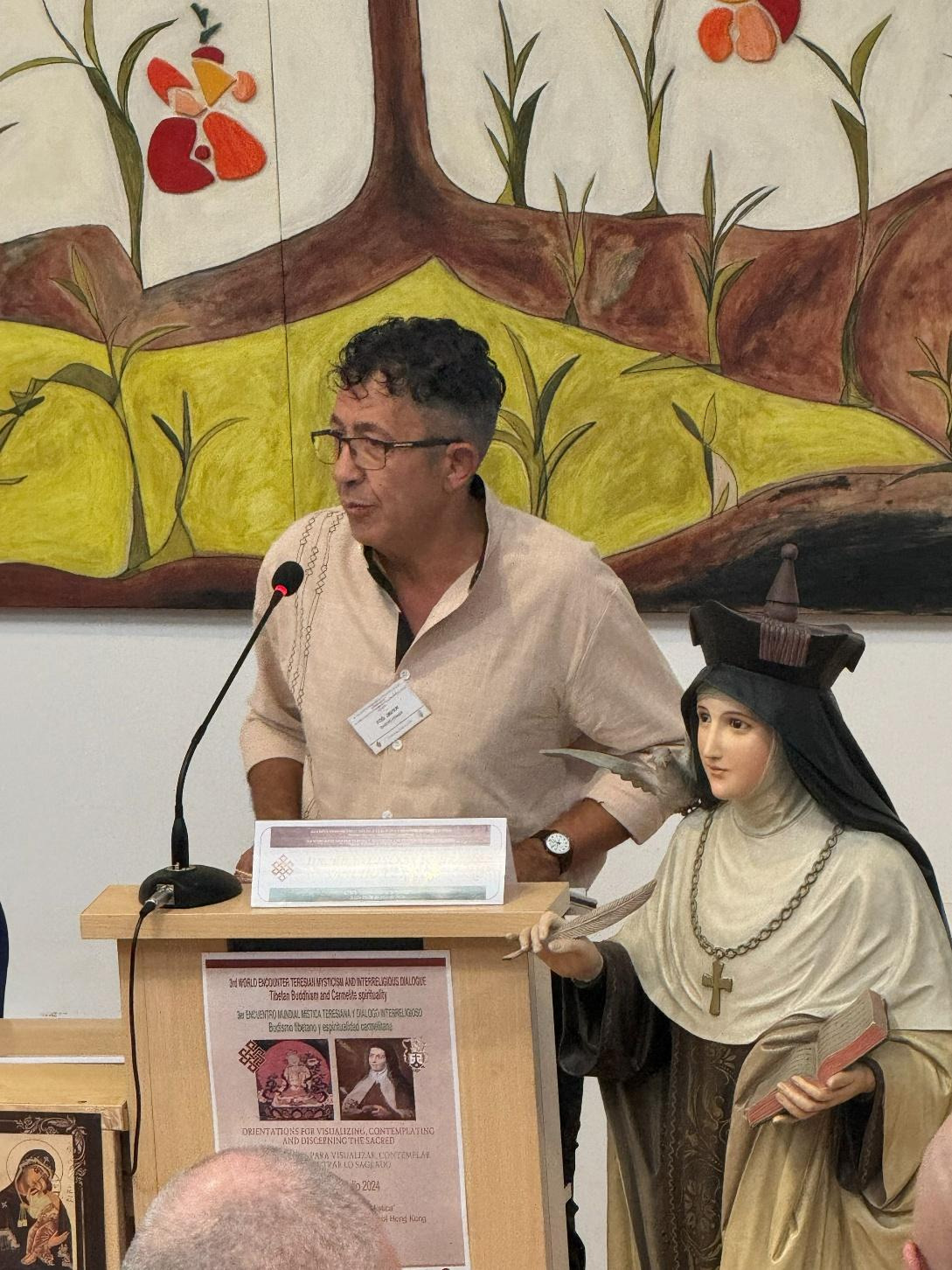
Carmelita Descalzo, doctor in spiritual theology and director for almost a quarter of a century of the International Center for Teresian and Sanjuanist Studies (CITES), the University of Mysticism in Ávila, Father Sancho Fermín has dedicated his life to studying and accompanying the interior paths traced by Saint Teresa of Jesus and Saint John of the Cross, two of the most decisive figures in Western mysticism. However, his desire to understand more deeply human suffering and its possibilities for transformation has recently led him to a place that is certainly unexpected: the very heart of contemporary Buddhism in Asia.
With his characteristic intellectual and spiritual humility, Father Sancho Fermín decided to enrich his vast experience from a different religious perspective, integrating broader knowledge and approaches. His choice took him to the Center for Buddhist Studies at the University of Hong Kong, where, with the support of that institution and the support of the Dharma-Gaia Foundation, he completed a master's degree in Buddhist Counseling. This innovative discipline integrates the principles and practices of Dharma-based psychology with contemporary guidance and support tools, offering a comprehensive approach to understanding and transforming human suffering.
Far from being a purely academic experience, his stay in Hong Kong was transformed into a profoundly existential interreligious dialogue, focused on some of the experiences that define us as human beings: alleviating suffering, practicing compassion and helping others. Although Christian mysticism, represented by Saint Teresa and Saint John of the Cross, and the Buddhist teachings of Dharma are based on different traditions, both share a common goal: to offer ways to transcend human suffering and achieve greater spiritual fulfillment. This meeting marked a milestone in what is known as “spiritual hospitality”, a concept that reflects the ability to embrace the wisdom of other traditions to enrich and illuminate one's spiritual perspective.
Next, we present an interview with Father Javier, in which he addresses key issues of this intercultural dialogue. The discussion includes her initial motivations for undertaking the course, the impact of being a student in a cosmopolitan environment such as Hong Kong, the practical application of Dharma therapy in pastoral work, and the deep sense of gratitude that this experience has left in her identity as a Carmelite.
BUDDHISTDOOR EN ESPAÑOL: You are a renowned expert on internality according to Santa Teresa. What led you to be specifically interested in Buddhist counseling as part of your spiritual and academic formation, as a Carmelite religious?
FATHER FRANCISCO JAVIER SANCHO FERMIN: This is a question that I have asked myself so many times, and that my classmates and teachers of the master's degree have asked me on several occasions. I think that the answer, or at least part of it, is closely linked to what has occupied and worried me for a long time.
My professional field, in addition to the tasks related to priesthood and spiritual accompaniment, has focused on the study, understanding and teaching of spirituality, a task that I have been doing for more than 30 years. This study and personal experience have taught me the profound implications that a healthy spirituality has on a person's overall health, and how mystics and people who authentically live their religion and spirituality are generally more balanced and healthy people. It is something that is perceived and observed in all areas and religious traditions.
All of this has led me to an interest in entering more deeply into the spirituality of other religions, and specifically into Buddhism. The profound psychological dimension and its ancient practical wisdom, very present in meditative practice and spiritual development, have opened up a wide field of understanding and confirmation of the importance of the spiritual path in the integral health of people.
BDE: Avila and Hong Kong seem to be, priori, two distant poles. How was the bridge that allowed you to integrate into the Buddhist counseling program at the HKU Center for Buddhist Studies built and what facilities did you find for this intercultural dialogue?
FJSF: Everything was very coincidental, although a series of events favored these studies. I had completed my task as director of the University of Mysticism after almost 25 years at the head of its creation and direction. So, they offered me the opportunity to take a sabbatical year. As at the time, my father was in very poor health, I couldn't be away for a long period of time, and I decided to spend the time deepening my knowledge of English. In addition, I had already been deepening my knowledge of Buddhism through online courses co-organized by the Rovira i Virgili University and the Dharma-Gaia Foundation.
On a return trip from teaching several courses in Japan and Vietnam, I stopped by Hong Kong for a brief meeting with Daniel Millet, in September 2023. On that occasion, we also met with the director of the HKU's CBS to talk about the International Congress of Buddhism that we would have in Avila in the summer of 2024. That's when Professor Halkias told me about the master's degree in Buddhist Counseling, given my interest in the interaction between psychology and spirituality, and offered me the possibility of a scholarship.
I didn't make any decisions at the time, but I promised I would think about it. A few months later I decided that it would be a unique opportunity that could enrich both my life and my service in the field of spirituality. The only difficulty was obtaining permission from my superiors and obtaining funding to study the master's degree. Finally, everything worked out, and I am deeply grateful to the Dharma-Gaia Foundation and CBS, who have made these studies possible.
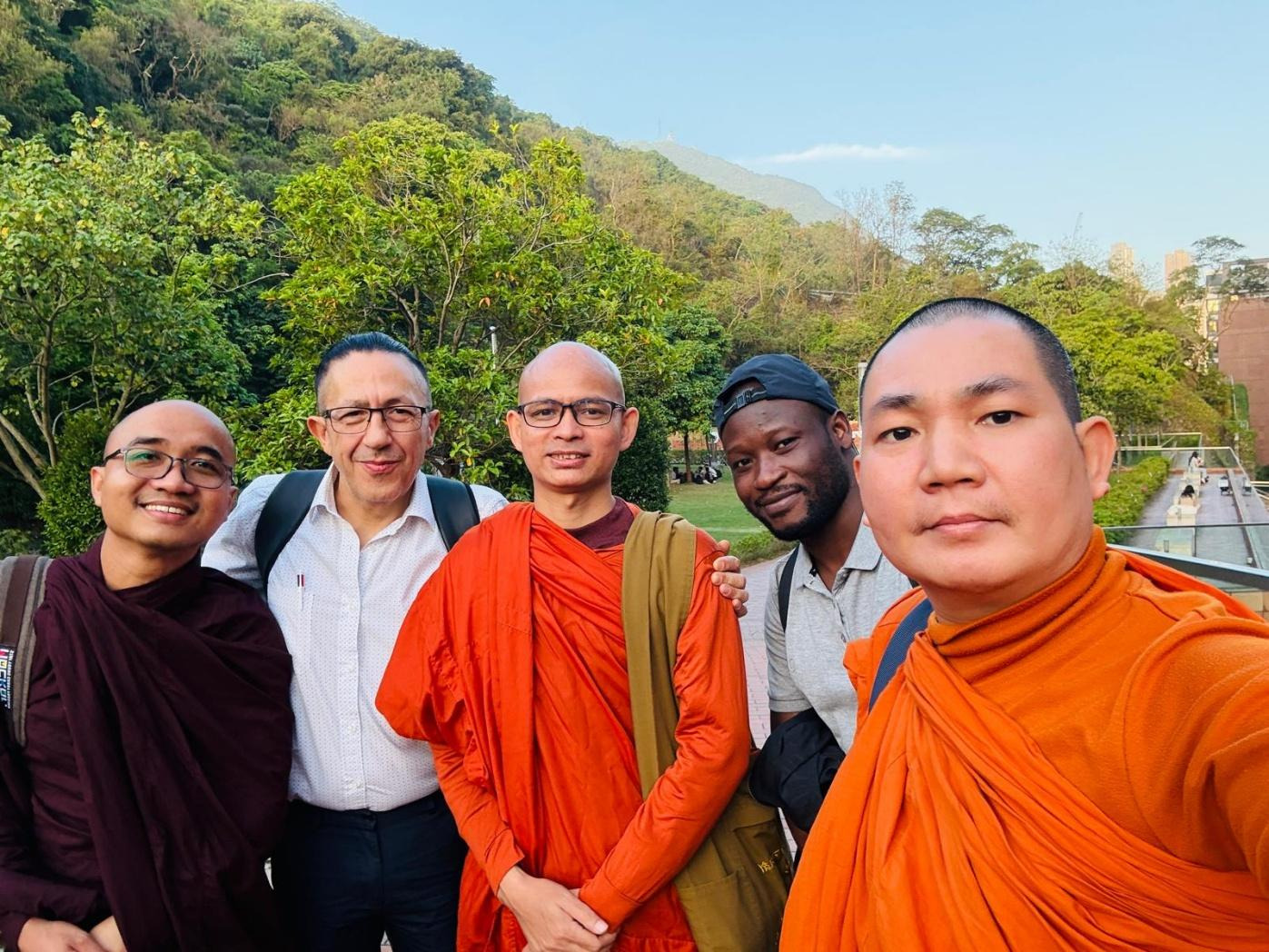
BDE: Beyond the academic curriculum, how would you describe the atmosphere and dynamics of this program? In an environment as cosmopolitan as Hong Kong, what did it mean for you — as a Carmelite and an academic — to dialogue with that mosaic of spiritual and professional sensibilities in your vision of accompaniment?
FJSF: From the outset, the program seemed to me to be very serious and balanced. I had previously examined programs at other North American universities that offered integration studies between psychology and spirituality. But they were programs that did not convince me because of their content, sometimes very vague or blurred.
Certainly, one always wants to delve more into some issues and aspects, but time does not allow us to cover all the issues that could be of great value. As a whole, the program combines psychotherapeutic practice with spiritual practice very well, and offers broad frameworks for understanding and study that, undoubtedly, must then be expanded by the student.
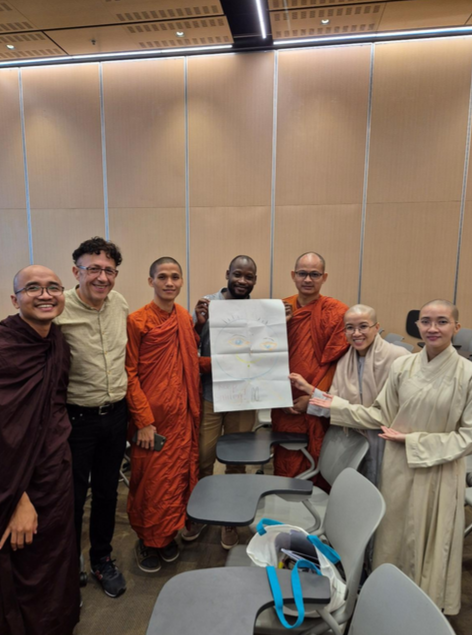
As for the classmates, the experience was somewhat surprising. In the main courses, there were more than 40 of us, of different ages and different nationalities, although the majority came from Hong Kong and China. There was a good group of monks and nuns, lay people from various professional fields... It turned out to be a profoundly enriching exchange. And all—except one servant—are Buddhist practitioners.
BDE: Getting into the subject of the master's degree, what specific topics or contents would you highlight for their value?
FJSF: For me, the highlight of the course was the remarkable harmony between the psychological and the spiritual; between contemplative practice and scientific principles derived from psychology. The teachers were fully aware and convinced of the importance of this interaction and of the need to achieve a balance.
In this sense, the academic quality would be described as extraordinary, based on a team of professionals and convinced practitioners of Buddhist spirituality. This gives greater consistency and credibility to the entire course.
BDE: Beyond the academic curriculum, could you share if there were any particular moments or specific situations that profoundly marked you or that brought a new nuance to your vision of spiritual accompaniment?
FJSF: Fortunately, my way of thinking has always been very open and dialoguing. That is why I cannot say that there were sudden or decisive changes. However, I did feel profoundly enriched. Many elements have been integrated into my own experience and knowledge as clarifying axes, confirming what I have always sensed: the great spiritual wealth that characterizes humanity.
The moments of practicing psychotherapeutic accompaniment were of incalculable value, since we worked in an environment of great intimacy and trust, where we had the opportunity to enter into the mystery of the other's experience. Whenever someone opens the door to their inner self, one is extremely enriched. These are not theories, but lives that are shared. In these meetings, one confirms, on the one hand, the profound desire to authentically live the values embodied in the Buddhist tradition and, at the same time, verifies that we all face similar difficulties in the spiritual process and human development.


