

This article is part of our special edition: "Deciphering Chinese Buddhism"
The Maritime Route
A ship docks in Panyu (Guangzhou); it likely arrived from a Southeast Asian port. The air smells of saltpeter and wet wood, and as they moor, the sails continue to whip and strike the mast. Immediately, the sailors begin to unload bundles of spices, ceramics, and fabrics. Meanwhile, a man wrapped in a saffron robe descends from the ship. He carries a rolled bundle under his arm and pays no attention to the stevedores or the cargo, but rather to the small wooden Buddha figure he holds in his hand, as if seeking a sign from it.
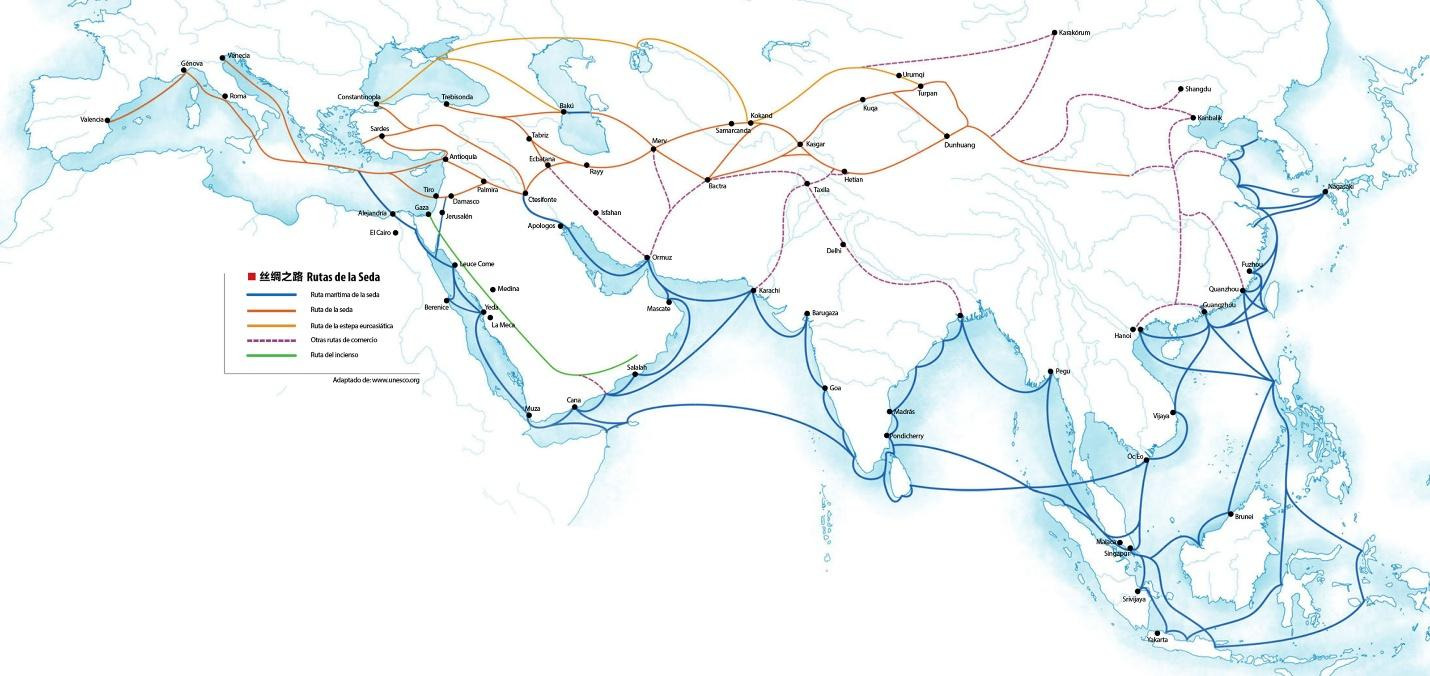
The predominant image in this series so far has been that of caravans advancing along the Hexi Corridor. However, this interpretive approach—especially towards the end of the Han dynasty—is incomplete, as it overlooks a significant part of history: the Maritime Silk Road. Twentieth-century historiography has shown that the coastal and riverine circuits of southern China were not merely secondary routes (Zürcher, 2007; Ch’en, 1964). Monks, manuscripts, and liturgical practices circulated through them. In fact, the speed with which Buddhism took root in China from the late 2nd century CE is difficult to explain without considering the permeability of these aquatic routes.
The Establishment of Buddhism at the End of the Han Dynasty
Towards the twilight of this imperial era—particularly during the last decades of the 2nd century and until its collapse in 220 CE—the penetration of Buddhism into China experienced a period of acceleration and establishment. While it was still largely interpreted through the lens of the syncretic Huang-Lao cult, historical chronicles, sutra colophons, and archaeological remains all agree that the faith was already taking root as a communal life, sustained by devotion, acts of charity, and public rituals.
A typical example of this collective dynamic is Zhài Róng (翟融), a local leader whose support in eastern China illustrates how Buddhism was asserting itself in the public sphere and gaining social inclusion. Historiographical narratives written centuries later depict Zhài Róng pushing for the construction of a cult complex, installing images, and holding large-scale ceremonies accompanied by the distribution of goods. Beyond the literal accuracy of these accounts, the scene highlights the importance of local notables: through patronage and celebration, they shaped a foreign faith that could be translated into a practice accessible to the community.
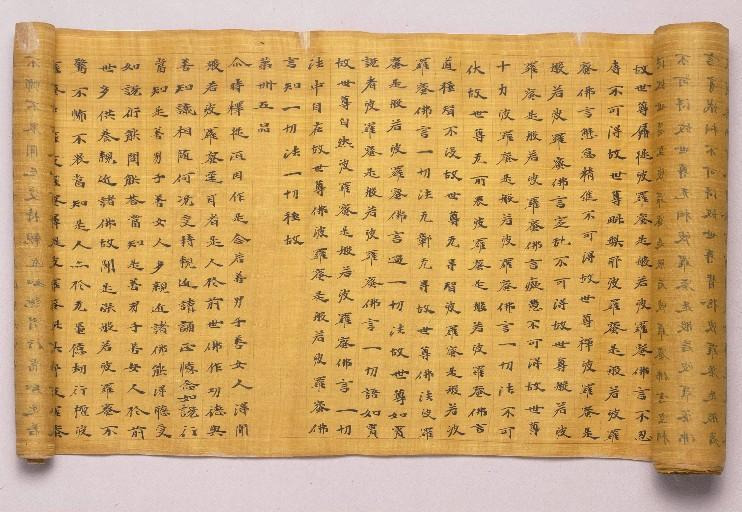
The nascent establishment of Buddhism in Han society is incomprehensible without considering the centrality of text translation, which became professionalized and served as the intellectual pillar of the early communities. According to the Chu sanzang ji ji by Sēngyōu, the work of translation was not an individual act but a collaborative process organized in successive stages: a master recited the original in Sanskrit or Prakrit; a bilingual interpreter rendered it phrase by phrase; several Chinese scribes transcribed the prose, and a team of revisers polished the final result (Zürcher, 2007). Although the initial vocabulary remained unstable and often included terms from Daoism, these choices responded more to pedagogical needs than to an attempt at syncretism. Colophons reveal that translation activity, funded by donations, quickly became consolidated. This process initiated a systematization that would lay the groundwork for the characteristic language and rhetoric of later Chinese Buddhism.
The assimilation of Buddhism into Han society was also facilitated by its ability to adapt to existing social and cultural structures. The character si (寺), originally applied to government offices, also came to refer to monasteries, which demonstrates its institutionalization within the Chinese state framework. In turn, translators drew upon the experience of the Honglu—the office of foreign relations—which used characters with phonetic value for the names of the Western Regions. By applying this method to transcribe Sanskrit and Prakrit, they managed to stabilize some transliterations. Thanks to its alignment with traditional Han societal values—such as benevolence, generosity, and moral rectitude—Buddhism was able to earn the respect of both the elite and merchants, leading its supporters to collaborate in funding translations and rituals.
As we noted in a previous article, the archaeological record of the Han dynasty also reveals objects that, although external to Buddhist doctrinal orthodoxy, functioned as symbols of prestige and funerary protection. These findings provide evidence that Buddhism was already becoming part of daily life, circulating with aesthetic, visual, and symbolic power long before its doctrinal canon was established.

In their initial contact, Buddhism and traditions linked to Huang-Lao did not always appear as watertight compartments. Henri Maspero spoke of a "very curious" fact: throughout the Han dynasty, both were "constantly confused" and came to be presented as if they formed a single religion. The Book of the Later Han offers a revealing detail: in 65 CE, Prince Liu Ying of Chu delighted in Huang-Lao practices and, at the same time, had Buddhist monks and laypeople at his court for ceremonies. A century later, in 166 CE, Emperor Huan made offerings to the Buddha and sacrifices to Huang-Lao deities (the Yellow Emperor and Laozi).
In this atmosphere of conceptual permeability, the layperson Mouzi states that he came to Buddhism through Daoism, which he calls dàdào ("Great Dao"): he had tried longevity techniques—abstinence from grains, recipes—without success, and therefore abandoned that path. Even on a linguistic level, traces of proximity are perceptible. As we have seen previously in this series, in early translations, the differentiation between Buddhist nirvana and Daoist immortality could appear subtle; and wuwei was a frequent term used to render nirvana, before the transcription nièpán (涅槃) became established usage.
In that religious economy, donation was not an accessory detail, but rather an infrastructure. Colophons and patronage records show that maintaining copies, public reading sessions, supporting specialists, and material production required constant resources. In return, the donor gained community prestige, connections, and, above all, merit. This logic helps explain the resilience of early Buddhism: if the political center shifted or burned, the network could re-establish itself at another node with new patrons.

The Ethical Clash: Confucian Criticisms and the Defense of Buddhism
The consolidation of Buddhism was not limited to the social and ritual spheres. As it gained public presence, it began to be scrutinized by the Confucian elite, and not always with sympathy. For many critics, the figure of the monk represented an alteration of the order sanctioned by Heaven: celibacy was considered a transgression against filial piety (xiao) by interrupting the continuity of the lineage; tonsure could be seen as an injury to the body inherited from one's parents; and monastic life was sometimes interpreted as unproductive—even parasitic—in an agrarian, bureaucratic, and military society. These criticisms were not mere moral objections: on them depended whether Buddhism would be relegated to a tolerated oddity or recognized as a legitimate path.
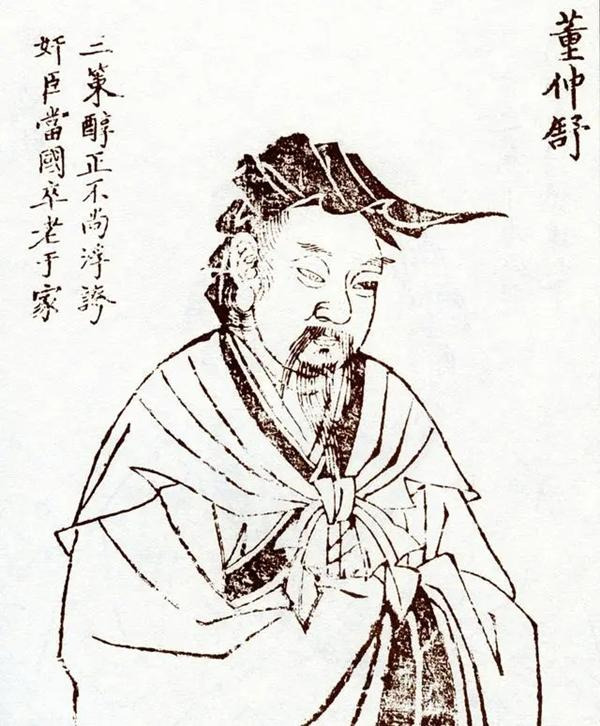
"Late" Translators in the Han Twilight: Consolidation of the Profession (Zhi Yao and Kang Mengxing)
As the political edifice of the Han crumbled, a silent revolution was taking shape in urban centers like Luoyang: imperial decay coincided with a growing technical maturity in translation. The paradox was that, amidst the instability that would lead to the empire's ruin, the influx of manuscripts from Central Asia intensified the need to translate Buddhist texts more—and better. This flow accelerated the transition from an artisanal practice to professional systematization.
This period marked a historical transition. Relatively stable procedures began to be established, and an incipient "Chinese mode" of producing Buddhist literature started to take shape, capable of transforming an imported faith into a locally crafted textual corpus. In contrast to solitary pioneers, translation became a collective and specialized endeavor. Within this framework, "later" translators like Zhi Yao and Kang Mengxing proved fundamental: less celebrated than their predecessors, they embodied the predominance of the workshop—teams of interpreters, scribes, and revisers—over individual charisma.
This phase transformed Buddhism in China, moving from an initial reception to a sustained textual culture. Zhi Yao and Kang Mengxing made visible the human network that consolidated vocabulary, formulas, and recitation methods, with Central Asia serving as a decisive corridor. Their legacy, though understated, helped Buddhism "speak Chinese" enduringly and laid firm foundations for its expansion.
At that same chronological threshold, the profile of mediators changed. While An Shigao represented an initial surge of practical texts (meditation) and Lokakṣema the more explicit introduction of Mahāyāna scriptures (prajñā and new soteriological imaginations), Zhī Qiān marked the shift from "raw" translation to literary translation. Grandson of Yuezhi immigrants but educated in China, a layperson and bilingual scholar, he placed style (wén) at the forefront: ensuring Buddhism sounded elegant to become legible to the elite, even at the cost of reopening the dilemma between fidelity (zhì) and fluency (wén).
In parallel, Kàng Sēnghuì embodied the southern connector. Of Sogdian origin and born in Jiāozhǐ, his figure is linked to the conversion of Sun Quan and the establishment of an official temple (Jianchu), with a repertoire of legitimation emphasizing relics (śarīra), miracles, and public demonstrations of sacred power. This combination—literary translation, political patronage, and relic "technology"—heralded the transition towards a more visible and institutional Buddhism in the kingdoms of the subsequent period.
Conclusion
The final collapse of the Han dynasty around 220 CE, in fact, acted as a catalyst for Buddhism's definitive establishment in China. Prior crises, such as the burning of Luoyang in 190, had already forced monks and scholars into exile southward, demonstrating the "portability" of the faith: thanks to manageable texts and civil patronage, communities managed to relocate with an agility impossible for the old imperial institutions.
This fragmented scenario validated a new model. While translators like Zhī Qiān maintained intellectual continuity, the maritime route gained unprecedented prominence in enclaves such as Jiāozhǐ. Kàng Sēnghuì's trajectory symbolizes this shift in focus, where naval routes offered an alternative to land blockades. It could be said that it was precisely the chaos at the end of the Han dynasty that compelled Buddhism to cease being a foreign curiosity and to definitively integrate into the fabric of Chinese society.
However, the utilitarian and sometimes confused view of early Buddhism would not remain intact. With the Han collapse, the promise of simple longevity was no longer enough to console a population ravaged by war and fragmentation. Amidst the breakdown of the old Confucian and imperial order, texts began to be translated with increasing rigor, and Buddhism's philosophical message—the understanding of suffering and liberation—began to resonate with the intelligentsia.
The small, hybrid, and schematic figures of Han tombs would, in later centuries, give way to colossal Buddhas in Yungang and Longmen under the Northern Wei. The "foreign god" would cease to be a funerary amulet and become a faith capable of articulating state, society, and aesthetics, forever transforming the spiritual and artistic landscape of East Asia. In retrospect, the end of the Han was not merely a prologue: it was the laboratory where routes, communities, translation, the economy of merit, intellectual defenses, and political legitimations were assembled, making possible the great medieval expansion of Chinese Buddhism.
Bibliography
Zürcher, Erik. The Buddhist Conquest of China: The Spread and Adaptation of Buddhism in Early Medieval China. 2nd ed. Leiden: Brill, 2007 [1959].
Nattier, Jan. A Guide to the Earliest Chinese Buddhist Translations. 2008; see also Journal of the International Association of Buddhist Studies (2008), pp. 189–196.
Zacchetti, Stefano. «An Shigao and the Introduction of Meditation Texts in China». Buddhist Studies Review 22.2 (2005): 161–176.
Harrison, Paul. «Who Gets to Ride in the Great Vehicle? Reconsidering Lokakṣema’s Translations». Journal of the International Association of Buddhist Studies 1987): 67–90.
Sharf, Robert. Coming to Terms with Chinese Buddhism. Honolulu: University of Hawai‘i Press, 2002. Especially pp. 41–44


